

Subrata Narayan Chakravarty, February 1, 2025
Walker Knight shared the sad news that Subrata Chakravarty passed away on February 1st, just three weeks before his 78th birthday. His family reported that he passed away peacefully at home while in hospice care, no longer suffering from the dementia he had endured in his later years.
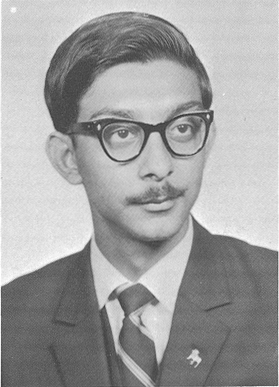
Juju, as he was known during our bright college years, graduated with honors and immediately enrolled at Harvard Business School, graduating in 1971. Following this, he embarked on a distinguished career as a business journalist, contributing to some of the most esteemed business publications in the world, including Forbes, Bloomberg, Institutional Investor, and the Boston Consulting Group.
Subrata arrived at Yale after attending an Indian boarding school. Although he spent most of his life in the United States, he actively contributed to his native homeland in significant ways. He was a founding board member of the South Asian Journalists Association (SAJA) in 2001 and played a vital role in the professional lives of many journalists, especially at global news organizations, at a time when those of Indian origin were still scarce.
Subrata had a remarkable career at Forbes. From 1991 to 1998, he focused on developing a team of writers who specialized in analyzing large companies. Their articles gained recognition, winning the Overseas Press Club Citation for Excellence in 1993 for a significant story published in 1992 about India’s economic reforms—the first major report on this topic.
Before that, Subrata advanced through the ranks at Forbes, beginning as a reporter and eventually becoming a Senior Editor. As a young associate, he co-developed “The Numbers Game,” a column focused on accounting issues that won several awards and was used as a textbook in business courses for several years. Additionally, he was part of a small team that created the first issue of Forbes in Arabic, which served as an introduction to American business for Arab investors.s.
He took two sabbaticals from editorial work at Forbes, one as head of corporate planning for Goodyear India Ltd in New Delhi (1976 -1979) and another as a research analyst on multi-industry companies at First Manhattan Co (1986-1987).
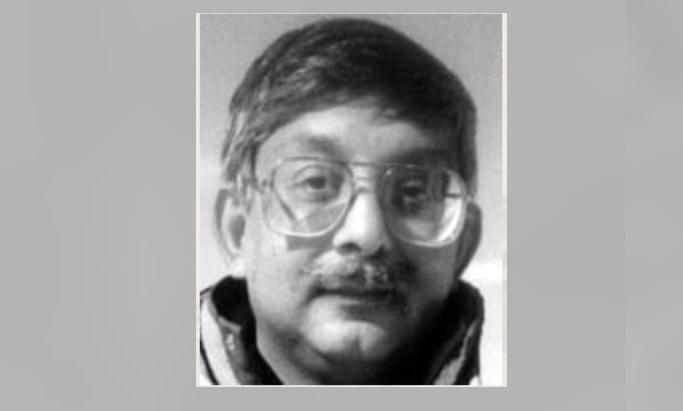
Indian Television published a loving tribute on February 3rd, A journalist with solid values: RIP Subrata N Chakravarty. The article includes some moving stories about Subrata’s career:
He set up a company SNC Media, helping journalists to polish their interviewing, research, analytical and writing skills. He used the problem-solving techniques learned at the Harvard Business School with a writing style and attitude developed at Forbes magazine to help journalists tell factually accurate, compelling and entertaining stories. (He had held quite a few training sessions with Indian publishing houses – amongst which figured the then-ABP-owned BusinessWorld before the group sold it. BusinessWorld too was once rated as the top business publication in India between the late 1980s and early 2000s.)
Subrata through his career did in depth interviews with the likes of futurist Herman Kahn of the Hudson Institute, management thinker Peter Drucker, Edwin Land of Polaroid, and Harold Geneen of ITT. But most of all he researched everything about companies and predicted the success of many and the downfall of some – rather with a high per centage of accuracy.
Raju Narisetti, a business colleague at McKinsey & Company, had this remembrance on LinkedIn:
[I am] mourning the loss of a pioneering Indian journalist in America and a friend to many of us who chose to be journalists in the US, and looked up to him and benefited from his friendship and counsel.
Born in Kolkata, and after an AB in Political Science from Yale University and an MBA from Harvard Business School, Subrata N Chakravarty spent ~27 years at Forbes, working closely with the legendary James W. Michaels, and mentoring scores of young journalists. He would then go to editing stints at Boston Consulting Group (BCG), Institutional Investor and Bloomberg News. [See the wonderful tribute Subrata wrote for his first real boss, James Michael. It gives real insight into both men. – Ed.]
Thank you, Subrata, for your kindness and generosity. And our thoughts with you, Barbara, Anjali, Joya and your extended family.

I am so glad you linked in the last paragraph twoSubrata’s article about the death of his mentor of Forbes. It is a beautifully written article which summons up two of the most important characters in modern Indian history. Thank you. Subrata, we will miss you, my Branford friend.
I remember Juju very fondly. A wonderful, thoughtful, gentle man with vision for the broader world and a grace he no doubt left where ever he went. And always fun to be around. He is representative of the best the Yale can offer and multiplied his lifetime opportunities in a way that benefited us all.
Steve Davis,
Branford ’69
from his wife, Bess,
Subrata died at home this February from Vascular Dementia.
Known for his method of getting free pizza every night. He rounded up four other people who wanted a pizza. He got the fifth one free if he rode his bike to the Pizza House and brought them back. His crew practice raincoat was put to good use.
Thanks, Bess
his wife of 54 years