
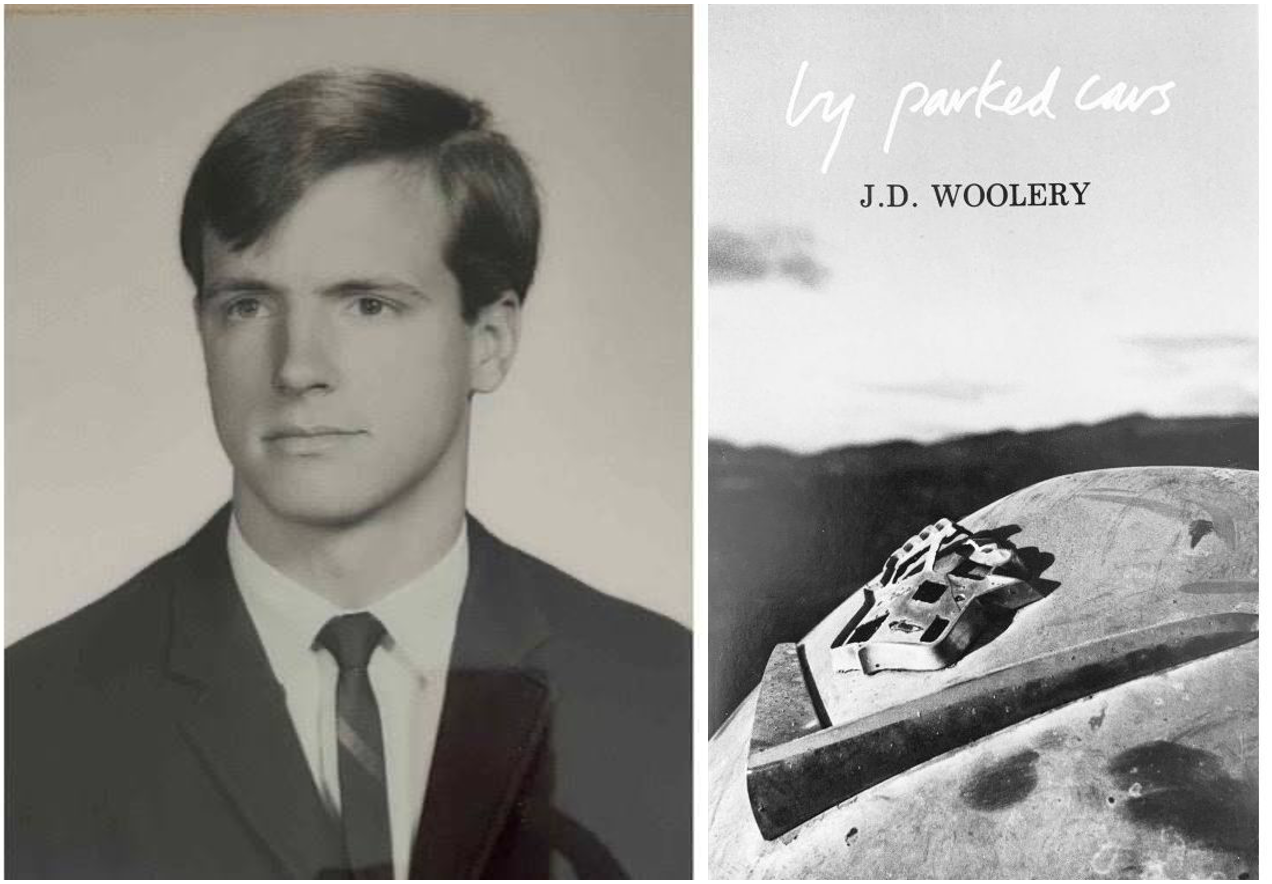
James Douglas Woolery, June 13, 2026
From About
Jamie Woolery was born in rural Ohio and educated at Yale. He veered from molecular biology and biophysics to medicine, where he settled down.
After a psychiatry residency at UCLA’s Neuropsychiatric Institute, where he was a student of Robert Stoller, and a year as a Robert Wood Johnson Clinical Scholar, Dr. Woolery eventually made his way to Kaiser Permanente in 1990. In the summer of 2005 he was appointed Chief of Psychiatry. He retired in 2014.
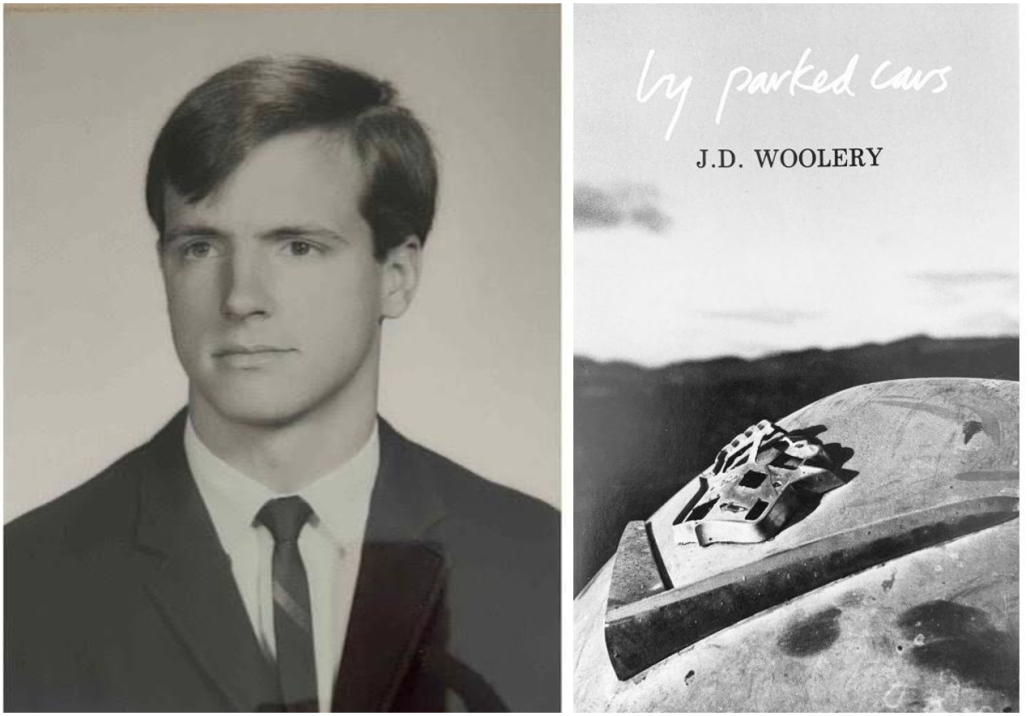
Dr. Woolery published a small book of poems, By Parked Cars, which was praised by John Ashbery, one of America’s most esteemed poets. Under the pseudonym Jamie Irons (Irons is his mother’s family name), other poems have appeared in various literary magazines, including the Carquinez Poetry Review, and the Zyzzyva.
With his wife Nina Schwartz, who is also a retired psychiatrist, Dr. Woolery raised four sons, all of whom work in technology. Woolery frittered away his time watching birds, learning mathematics, botanizing, fly fishing, and raising an orchard of six varieties of olive trees from Tuscany. He was also an active supporter of The Land Trust of Napa County.
In his semi-retirement, Jamie tutored mathematics up through calculus and linear algebra to local high school and junior college students (he did it for free in an effort to give something back to his community). He also taught himself higher math , including real and complex analysis, abstract algebra, and analytic number theory, believing, as Richard Feynman told Herman Wouk, that math “is the language God talks.”
from Legacy.com (Napa Valley Register)
James Douglas Woolery – Jamie to those who knew him – died peacefully at home on June 13, 2026, surrounded by his wife and sons .
Born and raised in rural Ohio, Jamie was educated at Yale University where he studied molecular biology and biophysics. After graduating he attended medical school at the University of California, San Diego, where he met his future wife, Anina. Early in his career he spent two years as a general practitioner among the Navajo in northeastern Arizona.
He completed his residency in psychiatry at UCLA’s Neuropsychiatric Institute, where he studied under Robert Stoller. For four years he treated severely disturbed adolescents at Napa State Hospital, and later worked with Spanish-speaking patients at a clinic in Watsonville, California. In 1990 he joined Kaiser Permanente, where he was appointed Chief of Psychiatry in the summer of 2005. He retired in 2014.
Jamie was also a writer and poet. He completed two novels, Peter Wing and Angel Gets Married, and published a small book of poems, By Parked Cars, which drew praise from John Ashbery, one of America’s most esteemed poets. Under the pseudonym Jamie Irons(his mother’s maiden name) his sons created a website for his work: jamieirons.com
In retirement, Jamie filled his days watching birds, fly fishing, learning mathematics, and tending an orchard of six varieties of olive trees grown from Tuscan stock. He was an active supporter of the Land Trust of Napa County. He tutored local high school and junior college students in mathematics up through calculus and linear algebra, free of charge, as a way of giving back to his community, and continued teaching himself higher math – believing, as Richard Feynman once told Herman Wouk, that mathematics “is the language God talks”.
He is survived by his wife, their four sons, Elijah, Alexander, Hart and Gavan and seven grandchildren. James Douglas Woolery
To plant trees in memory, please visit the Sympathy Store.
Published by Napa Valley Register from Jun. 25 to Jun. 26, 2026.
Jamie was my roommate for all four years at Yale. We were joined in our sophomore year by Karl Ameriks, Andy Armbrust and Hughes Norton.
Eternally curious, Jamie wanted to know and learn about everything. He was an auto-didact who taught himself Greek, Higher and Applied Mathematics, among many other subjects. When he wanted to learn about something, he dedicated himself whole-heartedly to the subject. He had thousands of books.
His interests were varied — from football, especially Yale football and the San Francisco 49ers, to poetry, from bird watching to religion, from mathematics to hiking.
He had a great sense of humor and loved to laugh. He was especially proud of all his sons’ accomplishments. Although we lived on different coasts, we kept in close touch for over 60 years. He never missed a birthday. He was a force of nature, and he will be missed.
During a time of real winters in New Haven—among the emerging remnants of the Sheff, above Grove and up Prospect—I met Jamie Woolery on the way to the new Kline Tower. We were pals in a new major, molecular biology and biophysics, and Jamie was a wonder. I had never met such a skeptical, questioning person, so committed to learning everything there was to learn. Thinking about him I am reminded of one of the two stellar faculty heads of that new department: the inimitable Harold Morowitz, whose application of thermodynamics to the origin of life was as startling as anything in the seminars by Sewall or Giamatti or Sculley. The other chair was Fred Richards, who had just solved the crystal structure of ribonuclease—something that slipped by me but probably not Jamie.
But to keep on point, it was the search for a new course that kept Jamie and me together and on the lookout—and we found what we were looking for in Clem Markert. Professor Markert, another remarkable faculty star (who had served in the Lincoln Brigade), had written a piece for one of the Yale magazines about genetic manipulation for the ethical management of the world’s food supply to withstand climate pressure. We persuaded him to teach us in a tutorial style about these and other subjects. I can’t remember what course listing we proposed but Jamie and I had an extraordinary semester learning about these emerging arenas before their time and, for me, beginning to learn how to think.
Jamie Woolery became Jeremy Irons. I lost track of him except for an occasional phone call, enough to know that he had kept up a friendship with Professor Markert (a feat I envied and admired), that he had bicycled across the country, and that he had left experimental science and become a psychiatrist and a poet, and, not surprisingly, gained success and acclaim in both new pursuits, and likely in everything else he touched. I wish I had kept up with him. He was a terrific guy.
While I did not know Jamie while in college, we linked up after I moved to Santa Rosa, CA, and joined Kaiser Permanente. Together, we put together a 35 ½ year mini reunion with a day in Sonoma and a day in Napa wine tasting. I realized that I was working with his wife Anina as Kaiser transitioned to the electronic medical record: small world. Jamie was just one of several classmates from Yale College and Yale School of Medicine that assumed leadership roles in the unique health plan that is Kaiser Permanente. For all he did while working and later in retirement, his passing leaves a hole in the community. R.I.P., Jamie